

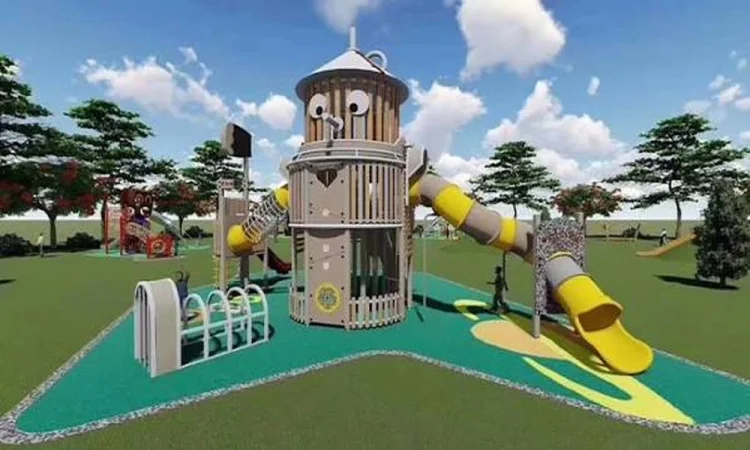
Most families buy a swing set the week a flyer lands in the driveway, then spend the next month wondering if they paid too much. I get it. The yard is empty, the kids keep asking, and a “sale ends soon” banner has a way of shutting down your patience.
Here is the honest version: a discount is only useful if you were already close to buying. The families who win at this game treat play equipment promotions as a calendar signal, not a spur of the moment trigger. They watch the seasonal rhythm, they read the fine print, and they buy when the deal matches the thing they actually want.
This guide walks you through that rhythm. You’ll get a timing framework I use for any large backyard purchase, the fine print traps that quietly cancel a discount, and a straightforward answer to the question everyone asks: is a percentage off installation worth more than a pile of free accessories?
Why play equipment goes on sale when it does
Backyard play gear follows a seasonal cycle that has almost nothing to do with your kids’ birthdays. Retailers stock up in spring, sell hard through early summer, and then need to clear space for next season’s inventory. When a dealer announces an inventory blowout with a hard cutoff date, that’s usually a warehouse problem, and you can benefit from it.
The catch is that clearance favors whoever shows up first. A blowout framed as “while supplies last” means a specific number of units, not an endless supply. If you’re driving out to look at a floor model the last weekend before the deadline, expect leftovers. If you can shop in the first two weeks of the sale window, you get the full selection.
The inventory clock
Swing sets and trampolines take up serious warehouse space. Dealers want them gone before the cold season, which is why you see steep markdowns in late summer and fall. That timing is predictable enough that you can plan around it.
I’d rather buy a floor model at a deep discount in September than pay full price in May for the same frame. The structure is identical. The only difference is who ate the storage cost.
The three layer deal test
Anyone can print a big percentage on a banner. What matters is what the discount covers. Most outdoor play promotions stack three separate offers, and each one has its own value.
| Layer | What it usually covers | How much it’s worth to you |
|---|---|---|
| Product discount | The swing set, trampoline, or hoop itself | Highest value, applies to the biggest line item |
| Service discount | Delivery and professional installation | High value if you weren’t going to build it yourself |
| Free accessories | Canopy, ladder, mats, anchors, basketball hoop add-ons | Medium value, depends on whether you’d buy them anyway |
Run the numbers on your own order before you get excited. A half off installation offer can save hundreds on a large wooden set with a complex build. The same offer on a simple metal frame you could assemble in an afternoon is worth much less. Free accessories are the weakest layer unless the items are ones you already planned to buy.
Here’s the part most flyers hide in small text: delivery discounts often come with a mileage charge. If you live thirty miles from the showroom, that fine print can quietly eat a chunk of your savings. Ask for the total delivered price in writing before you commit.
Fine print that quietly kills a discount
The Federal Trade Commission exists because retail advertising has a long history of vague claims, and a percentage off banner is exactly the kind of claim worth reading twice. Before you hand over a deposit, check these five things.
- Expiration date. A date with a year attached is a real deadline. A vague “limited time” is not.
- Prior purchase exclusion. Many deals won’t apply to something you bought last month, which matters if you’re tempted to “re-buy” and return.
- Mileage and service area. Delivery promos often cover a radius, not the whole map.
- Quantity limits. “First come” language means stock is finite, so call ahead and ask what’s left.
- Warranty terms. Confirm the warranty still applies when you buy during a clearance event.
One more: ask whether installation has to be scheduled inside the promotional window or just purchased inside it. Those are two very different commitments, and the answer changes how fast you need to move.
When to hold, when to buy
My rule is simple. Buy when the deal covers the thing you were already going to pay for. Hold when the deal only covers things you’d never buy at full price.
So a big product markdown plus a real installation discount is a buy, especially if the model you want is in stock and the deadline is firm. A modest markdown bundled with a pile of accessories you don’t need is a hold. Wait a few weeks and the product discount usually improves as the season winds down.
There’s a safety angle worth checking while you shop, too. The Consumer Product Safety Commission publishes recalls and safety guidance for outdoor play equipment, and a quick check on a specific model takes two minutes. A great price on a recalled unit is not a deal.
What I’d actually do
Start shopping two to four weeks before you plan to buy. Get quotes on the exact set, then watch for the inventory clearing window. When a promotion appears, run the three layer test, confirm the delivery total in writing, and put down the deposit early in the sale window so you get the model you want instead of the leftovers.
If you can’t get installation scheduled until after the deadline, ask the dealer to lock the price and the install date together. Most will, and it removes the stress of racing a calendar.
The budget question nobody asks out loud
Timing matters, but your total spend matters more. The Bureau of Labor Statistics tracks household spending patterns across the country, and outdoor recreation consistently shows up as a category families care about but rarely plan for the way they plan a car payment. A swing set is a multi-year purchase, so treat it like one.
Set your ceiling before you look at any flyer. Then decide which layer you care about most: the product price, the installation, or the extras. When a promotion clears that bar, you buy. When it doesn’t, you wait.
That single habit, deciding your priorities before the banner appears, is what separates a good deal from a good story you tell at a barbecue.
So what’s actually keeping you from pulling the trigger this week? If it’s the price, watch the inventory clock. If it’s the install, price that layer separately. Either way, go check the current sale window, confirm what’s still in stock, and make the call while the selection is still on your side.


